The Arabic AI Performance Gap: Why Global Models Fail in MENA
The Arabic AI Performance Gap: Why Global Models Fail in MENA


Powering the Future with AI
Key Takeaways

Global AI models struggle with Arabic, creating costly performance gaps in MENA.
Arabic is spoken by over 422 million people, yet represents just 0.5% of web content.
Arabic-first models are now outperforming global giants like GPT-4o by more than 18 percentage points on Arabic benchmarks.
The future of AI in MENA will be powered by Arabic-native intelligence, not adapted English models.
We need to talk about the elephant in the server room.
We are spending billions of dollars to deploy the world's most advanced AI systems across the Middle East. We are integrating them into our banks, our hospitals, and our government services. We are promised a revolution in efficiency and intelligence.
But there is a problem. These systems, for all their brilliance, are functionally illiterate in the language of the people they are supposed to serve.
They are English-native geniuses trying to pass a test in Arabic. And they are failing.
This is a strategic blind spot. When we rely on models that treat Arabic as a second-class citizen, we aren't just getting slightly worse performance. We are building a digital infrastructure that fundamentally misunderstands the region it operates in.
The Scale of the Disconnect
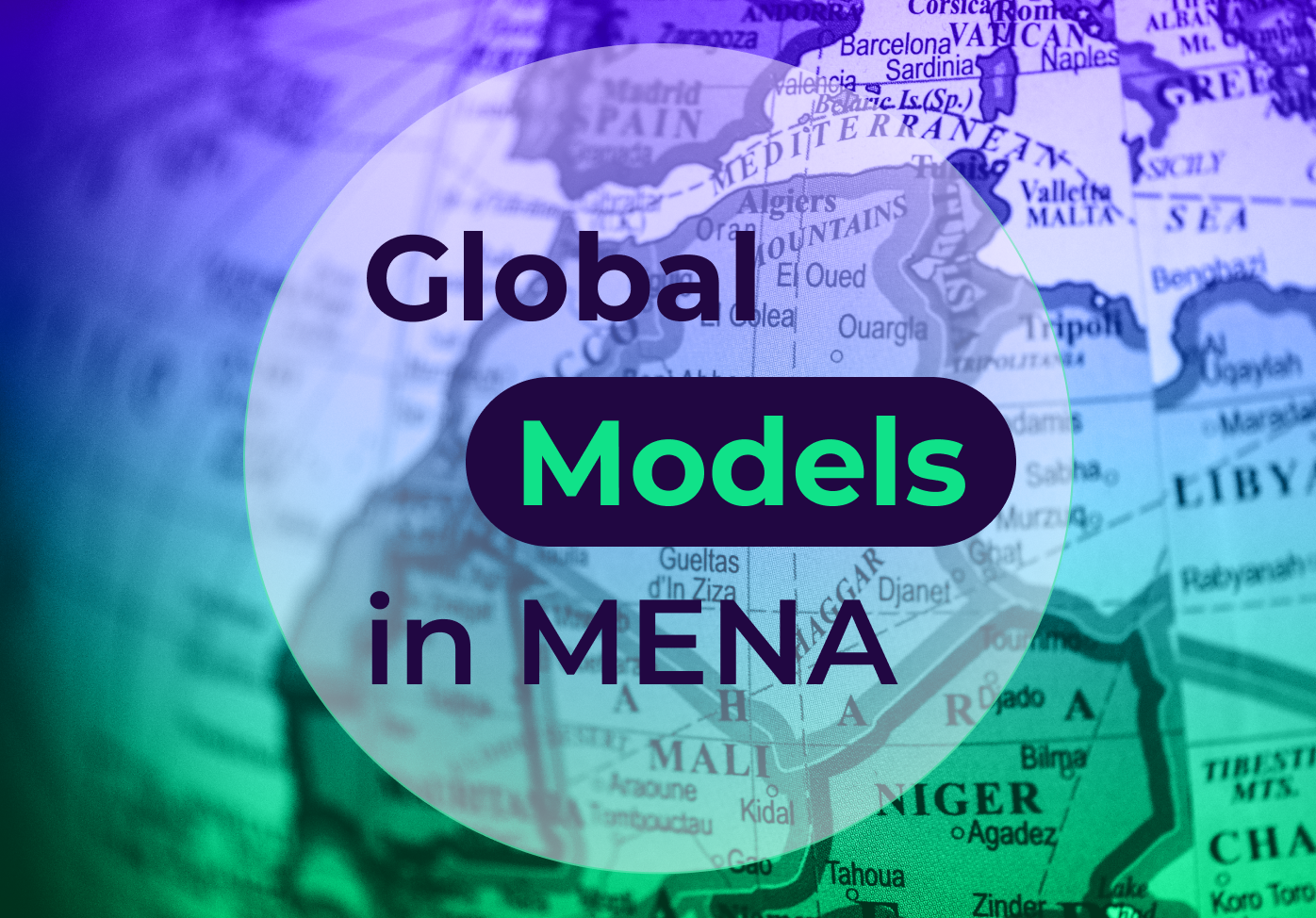
Arabic is spoken by over 422 million people across 22 countries, making it the fifth most spoken language globally. Yet despite this massive reach, Arabic represents just 0.5% of web content compared to English's commanding almost 50%, according to Statista. This digital divide translates directly into AI performance gaps that cost businesses opportunities and limit technological inclusion across the Middle East and North Africa.
Think about what that means for an AI model. These models learn by reading the internet. If 99.5% of what they read is not Arabic, how can we expect them to understand the nuance of a Saudi dialect, the legal terminology of a UAE contract, or the cultural context of an Egyptian customer service query?
We can't. And the result is a "performance gap" that is costing MENA businesses real money.
The Cost of "Good Enough"
So what is the business impact of Arabic AI failures? For too long, the approach has been to take a massive English model, feed it a bit of Arabic data, and hope for the best. This is the "good enough" strategy. But in the real world, "good enough" is dangerous.
- In Healthcare: AI tools that overlook cultural norms or gender expectations can provide inappropriate guidance, eroding trust and potentially delaying critical care.
- In Finance: A customer in Riyadh speaks to a banking bot using a local dialect. The bot, trained on formal Modern Standard Arabic (MSA), gets confused. It locks the account instead of transferring funds. That customer is gone. Simple banking queries become frustrating experiences.
- In Law: A legal AI reviews a contract. It misses a subtle distinction in Islamic finance terminology because its training data was dominated by Western legal concepts. The liability is massive.
- In Education: Large language models perform significantly worse in Arabic than English on key educational tasks like tutoring and feedback, risking confusion for Arabic-speaking students.
The Rise of Arabic-Native Intelligence
The solution is emerging from within MENA itself. The UAE's Technology Innovation Institute launched Falcon Arabic in 2025, achieving benchmark leadership as the best-performing Arabic AI model in the region. And then there’s Munsit. Developed by CNTXT AI, Munsit is the region’s first enterprise-grade Arabic speech recognition platform built on 30,000+ hours of annotated audio spanning 25+ dialects.
Building better AI systems takes the right approach

Why Native Models Win
The difference in performance is not subtle.
When you use a native model, you are using a system that was designed for your reality.
The era of importing AI models and hoping they work is over. The performance gap is too wide, and the stakes are too high.
For leaders in the MENA region, the mandate is clear. We cannot settle for AI that translates. We must demand AI that understands. We must invest in the data, the infrastructure, and the models that reflect our language and our culture.
The future of AI in the Middle East will not be written in English. It will be written in Arabic.
FAQ
Powering the Future with AI






















.svg)






.svg)