Text Annotation: Types, Techniques, and Benefits


Powering the Future with AI
Key Takeaways

Text annotation is the process of labeling text data to make it understandable for machine learning models, particularly in Natural Language Processing (NLP).

Key techniques include Named Entity Recognition (NER), sentiment analysis, text classification, and Part-of-Speech (POS) tagging, each serving a unique purpose in data training.

The quality of text annotation directly influences the accuracy and performance of AI models, making it a foundational step in the NLP development lifecycle.

Advanced tools and a clear workflow are essential for managing the complexity of text annotation projects, ensuring consistency, and achieving high-quality results.
Language is no longer a barrier between humans and machines. From chatbots that provide instant customer support to search engines that understand your queries with remarkable accuracy, Natural Language Processing (NLP) has become an integral part of our digital lives. The silent engine driving these advancements is text annotation, a meticulous process of labeling and categorizing text data to make it comprehensible for machine learning models.
Text annotation, at its core, is the practice of adding metadata to text to highlight specific features, sentiments, or entities. This labeled data serves as the ground truth for training and validating NLP models, teaching them to recognize and interpret the nuances of human language.
Core Techniques in Text Annotation
Text annotation is a multifaceted discipline with a variety of techniques tailored to different NLP tasks. The choice of technique depends on the specific goals of the project, with each method providing a different layer of information for the machine learning model.
Named Entity Recognition (NER): Identifying the Who, What, and Where
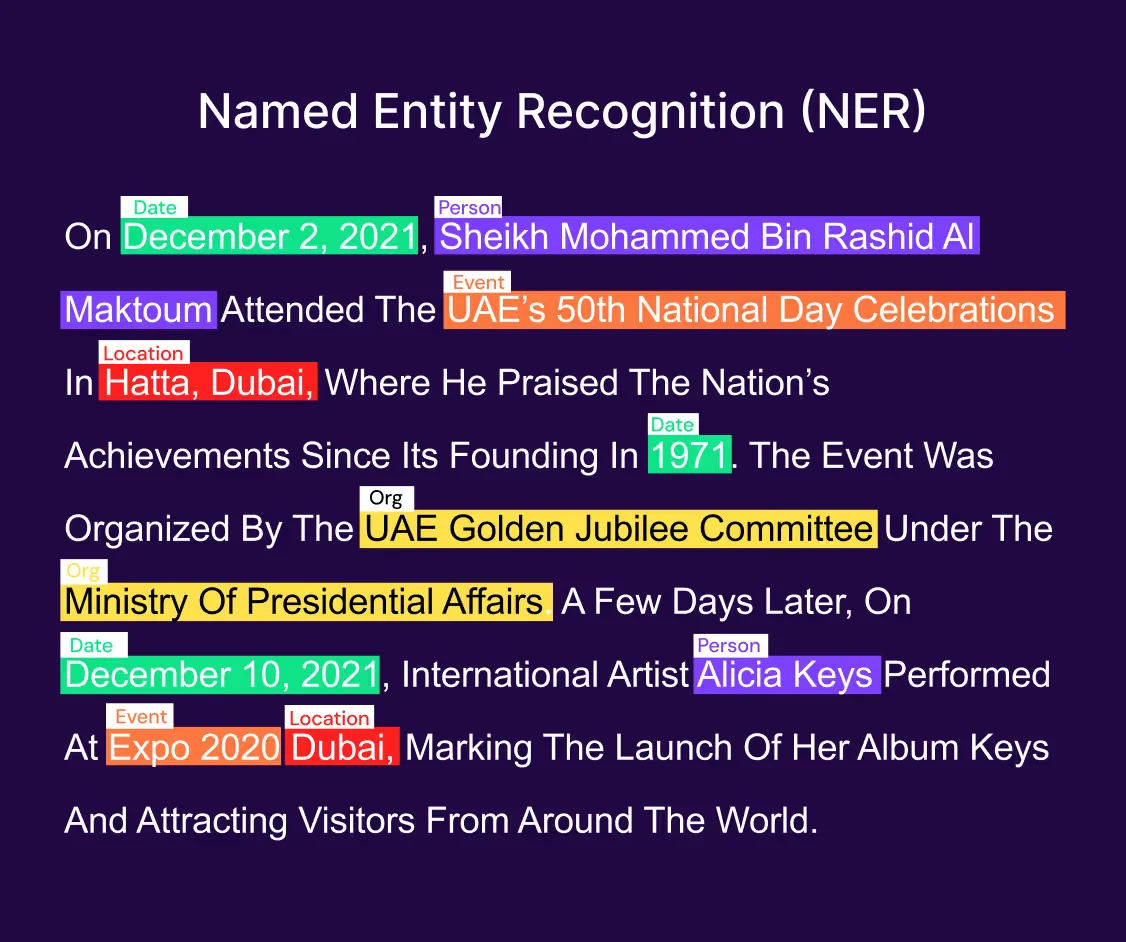
Named Entity Recognition (NER) is one of the most common and fundamental text annotation tasks. It involves identifying and classifying named entities in text into predefined categories such as persons, organizations, locations, dates, and more. This process helps machine learning models understand the context of a document and the relationships between different entities.
For example, in a news article, an NER model can identify the names of political leaders (Person), the countries they represent (Location), and the organizations they are affiliated with (Organization). This structured information can then be used for a variety of applications, from building knowledge graphs to improving the relevance of search results.
Sentiment Analysis: Understanding the Voice of the Customer
Sentiment analysis is the process of determining the emotional tone of a piece of text. It is widely used by businesses to gauge customer opinions, monitor brand reputation, and understand market trends. Annotators label text data as positive, negative, or neutral, and in more advanced cases, with more granular emotions like joy, anger, or sadness.
This annotated data is then used to train models that can automatically analyze large volumes of text from social media, customer reviews, and support tickets. The insights gained from sentiment analysis can help businesses improve their products and services, and better connect with their customers.
Text Classification: Organizing the World's Information
Text classification is the task of assigning a document to one or more predefined categories. It is a core component of many applications that deal with large volumes of text, such as email clients that automatically filter spam, news aggregators that group articles by topic, and content moderation systems that flag inappropriate content.
Annotators play a crucial role in creating the training data for these systems by manually categorizing a large number of documents. The quality and consistency of these annotations are critical for building accurate and reliable text classification models.
Part-of-Speech (POS) Tagging: Deconstructing Language
Part-of-Speech (POS) tagging is a more granular form of text annotation that involves labeling each word in a sentence with its corresponding grammatical category. This includes identifying nouns, verbs, adjectives, adverbs, and other parts of speech. POS tagging is a fundamental step in many NLP pipelines, as it provides a syntactic structure that is essential for more complex tasks like machine translation and question answering.
The Text Annotation Workflow
A successful text annotation project requires a well-defined workflow that ensures quality, consistency, and efficiency. This workflow typically involves several stages, from data collection to model integration.
1. Data Collection and Preparation
The first step is to gather the raw text data that will be annotated. This data should be representative of the real-world scenarios the NLP model will encounter. Once collected, the data may need to be pre-processed to remove irrelevant information, correct errors, and standardize the format.
2. Annotation Guidelines and Tool Selection
Clear and comprehensive annotation guidelines are essential for ensuring consistency across a team of annotators. These guidelines should define the different labels, provide examples of correct and incorrect annotations, and outline how to handle ambiguous cases. The selection of the right annotation tool is also critical, as it can significantly impact the efficiency and quality of the annotation process.
3. Annotation and Quality Assurance
This is the core stage where annotators label the text data according to the guidelines. To ensure high quality, a multi-stage quality assurance process should be implemented. This can include peer review, where annotators check each other's work, and expert review, where a senior annotator or domain expert verifies the annotations. Automated quality checks can also be used to catch common errors.
4. Model Training and Evaluation
Once the annotated data is ready, it is used to train and evaluate the machine learning model. The performance of the model is a direct reflection of the quality of the annotations. If the model's performance is not satisfactory, it may be necessary to revisit the annotation guidelines, provide additional training to the annotators, or collect more data.
Benefits of High-Quality Text Annotation
Investing in high-quality text annotation brings a multitude of benefits that directly impact the success of any NLP project.
- Improved Model Accuracy: The better the quality of the training data, the more accurate the machine learning model will be. High-quality annotations lead to models that can make more reliable predictions and decisions.
- Enhanced Model Generalization: A well-annotated dataset that covers a wide range of scenarios helps the model generalize better to new, unseen data. This is crucial for building robust AI systems that can perform well in real-world environments.
- Faster Time to Market: While high-quality annotation may seem time-consuming, it can actually accelerate the development process. By starting with a clean and accurate dataset, you can reduce the time spent on debugging and iterating on the model.
- Increased Trust and Reliability: For AI systems that interact with humans, such as chatbots and virtual assistants, accuracy and reliability are paramount. High-quality text annotation is a key factor in building user trust and ensuring a positive user experience.
Building better AI systems takes the right approach. We help with custom solutions, data pipelines, and Arabic intelligence. Learn more.
Building better AI systems takes the right approach
Conclusion
Text annotation is a critical and indispensable part of the NLP development lifecycle. It is the process that transforms raw, unstructured text into the high-quality training data that machine learning models need to learn and understand human language. By investing in high-quality text annotation, organizations can build more accurate, reliable, and intelligent AI systems that unlock the full potential of their text data.
FAQ
Data labeling is a broader term that refers to the process of labeling any type of data, including images, videos, and audio. Text annotation is a specific type of data labeling that focuses on text data.
The cost of text annotation can vary widely depending on several factors, including the complexity of the task, the volume of data, the required level of accuracy, and the expertise of the annotators. It is best to consult with a text annotation service provider to get a quote for your specific project.
While there are tools that can automate parts of the text annotation process, human-in-the-loop is still essential for ensuring high quality. Automated annotation can be used to pre-label data, which is then reviewed and corrected by human annotators. This combination of automation and human expertise can significantly improve efficiency without sacrificing quality.
Some of the common challenges in text annotation include dealing with ambiguity and subjectivity in language, ensuring consistency across a team of annotators, and scaling the annotation process to handle large volumes of data. These challenges can be addressed through clear guidelines, rigorous quality control, and the use of advanced annotation tools.