Data Foundation
l 5min

Data Preparation: Turning Raw Inputs into Intelligent Assets

Data Preparation: Turning Raw Inputs into Intelligent Assets

Table of Content

Powering the Future with AI

Join our newsletter for insights on cutting-edge technology built in the UAE
Thank you! Your submission has been received!
Oops! Something went wrong while submitting the form.

Key Takeaways

Data preparation is the real control surface for AI risk. Model behavior reflects how raw inputs are structured, labeled, and verified before training begins.

Arabic and bilingual data amplify hidden failure modes. Dialects, code-switching, and script handling introduce errors that only disciplined annotation and QC pipelines can surface early.

Human oversight must be placed deliberately. Human-in-the-loop review is most effective when focused on uncertainty, edge cases, and high-impact decisions rather than blanket manual labeling.

Quality control makes AI auditable and repeatable. Acceptance rules, agreement metrics, and traceable gold sets turn data from a one-off input into a governed asset.

Most teams now agree: the core bottleneck is not model architecture but rather data quality.

As enterprises move from pilots to production, the difference between a useful model and a risky one often comes down to how raw inputs become model-ready assets.

The Steps Are Simple to Describe But Hard to Execute at Scale

  1. Add structure to unstructured inputs (annotation)
  2. Map signals to targets with defensible ground truth (labeling)
  3. Prove fitness for purpose via quality control before training pipelines consume the data

This is data-centric AI in practice.

Research shows label errors can reshuffle benchmark rankings and degrade accuracy in non-obvious ways.

Regulators are also elevating data quality and human oversight.

For organizations in the UAE and KSA operating under data residency and audit obligations, a disciplined data preparation pipeline is foundational to trustworthy sovereign AI.

What Follows: An Analytic Framework

We treat data preparation as a product lifecycle.

We define the stages, show how to instrument them, and explain how to design human oversight that raises quality without creating operational drag.

Problem: Unstructured Data Without Structure, Supervision, or Proof

Raw inputs arrive as:

  • Arabic–English text
  • PDFs
  • Call center audio
  • Inspection images

Without an ontology to define entities and relationships, without labels that encode targets, and without evidence the dataset is accurate and complete, models learn shortcuts or amplify bias.

These Risks Multiply in Bilingual Contexts

Dialect, code-switching, and script normalization complicate annotation and labeling for Arabic and can create silent errors that surface only in production.

Approach: Three Stages Reinforced by Human-in-the-Loop

  1. Annotation adds structure to the raw
  2. Labeling maps signals to targets
  3. Quality control proves fitness for purpose

HITL validation spans these stages to catch uncertainty and high-impact items, before and after deployment.

1. Annotation: Adding Structure to Raw Inputs

Annotation attaches meaningful structure to inputs.

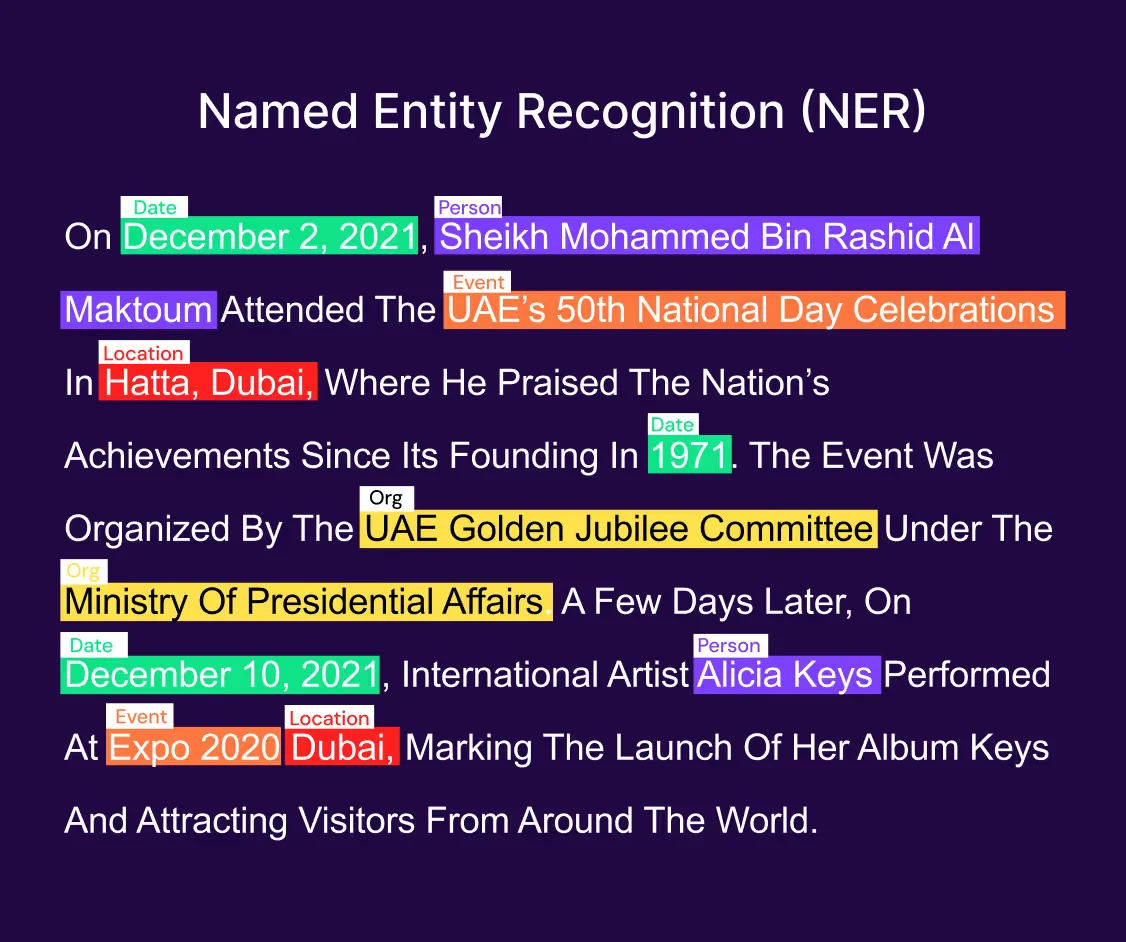
  • For text: Spans, entities, and relations
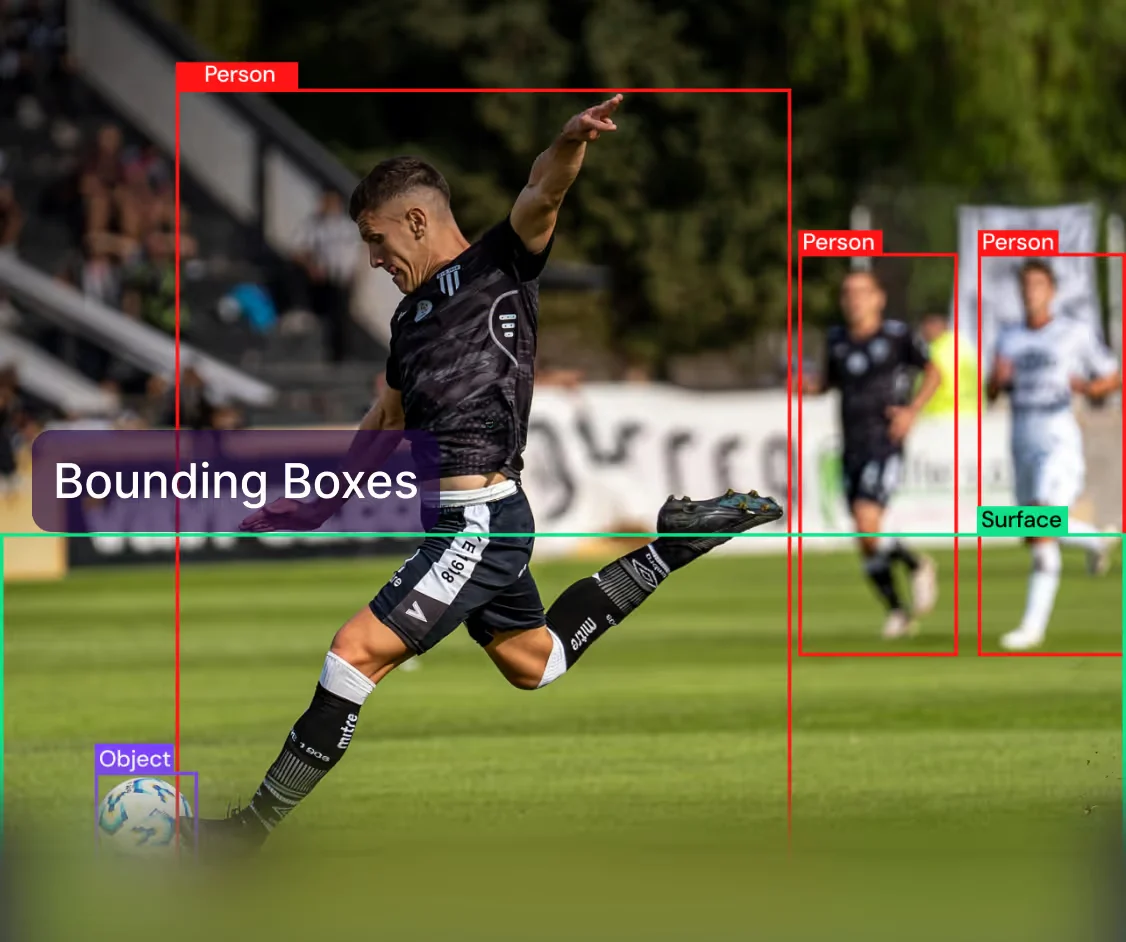
  • For images: Bounding boxes and segmentation masks
  • For audio: Timestamps and speaker turns

Success Requires:

Clear labeling rules:

  • Everyone follows them
  • Can update under version control

Tools that enforce these rules:

  • Record every edit
  • No free-text labels

Measurement of agreement between annotators:

  • Detect unclear guidelines
  • Inter-annotator agreement (e.g., Cohen's kappa, Krippendorff's alpha)

Inter-Annotator Agreement Reveals Where Guidelines Are Vague

Vague definitions later appear as noise in the model and unstable results.

Treat rule changes like code changes: Document, review, and approve them, rather than editing in place.

2. Labeling: Converting Structured Examples into Ground Truth

Labeling converts structured examples into the "ground truth" that trains and tests models.

Hybrid Strategy Balances Coverage, Cost, and Accuracy

Strategy Pros Cons Use Case
Expert labeling High precision Time-consuming, expensive Critical labels, edge cases
Crowd labeling High volume, fast Needs oversight, quality varies Backlog data, first-pass labels
Programmatic labeling Scalable, consistent Low confidence, needs review Simple patterns, model votes

Treat programmatic labels as candidates, not facts. Route low-confidence or high-risk items to human reviewers. Maintain a gold-standard subset for adjudication and for stable metric tracking across releases.

Research shows label errors in popular benchmarks can change model rankings. So instrument label quality and revisit it over time. Don't assume it was solved in sprint one.

3. Quality Control (QC): Verifying Fitness for Purpose

QC verifies accuracy, consistency, and completeness before training.

Define Acceptance Rules That Link Directly to Business or Model Goals

For example:

  • Set minimum accuracy levels
  • Ensure coverage for rare classes

Use Random Sampling, Double-Blind Audits, and Drift Checks

  • Random sampling: Test subgroups
  • Double-blind audits: Reduce bias
  • Drift checks: Detect changes over time or region

ISO/IEC 25012 Offers a Practical Catalog of Data Quality Dimensions

ISO/IEC 25012 dimensions:

  • Accuracy: Correctness of labels
  • Completeness: Coverage of all classes and segments
  • Consistency: Agreement across annotators and time
  • Credibility: Trustworthiness of sources

Human-in-the-Loop (HITL) as the Risk Control Valve

Before Deployment

Use expert review for:

  • Critical labels
  • Edge-case policies

After Deployment

Use active learning to send uncertain or high-impact predictions to humans for confirmation. Maintain audit trails for regulators and internal reviews.

NIST's AI Risk Management Framework emphasizes human oversight and strong data practices as pillars of trustworthy AI. Safety-critical sectors, including finance and public services in MENA, need this discipline.

Architecture: How to Make Data Preparation Repeatable

Treat data preparation as code AND as a managed service.

Core Components

  1. Rule repository with version control
  2. Annotation and labeling platform that enforces structure
  3. Quality service that measures agreement and error types
  4. Validation service that runs QC checks before training
  5. Control panel for gold sets, audit trails, and reviewer roles
  6. Active-learning loop that flags uncertain production cases for review

Operationalize in Clear Steps

  1. Define rules and success metrics
  2. Run a small pilot to test them, then expand once consistency stabilizes
  3. Generate first-pass labels automatically; route low-confidence items to experts
  4. Maintain verified gold sets across releases. Track accuracy and error patterns
  5. Enforce QC checkpoints to block low-quality data
  6. Monitor deployed models, detect drift, and update data where needed

For Bilingual and Arabic-First Projects

Include language-specific checks:

  • Normalize Arabic script
  • Handle diacritics consistently
  • Record dialect words clearly in your rule set

Ignoring these will distort evaluation and real-world results. Arabic morphology and code-switching are common in MENA workloads; if your ontology ignores them, your label distributions will mislead real-world performance assessments.

Building better AI systems takes the right approach

We help with custom solutions, data pipelines, and Arabic intelligence.
Learn more

Business Impact: Better Models and Faster Time to Value

A disciplined data preparation pipeline pays for itself.

Benefit Impact
Clean labels Improve training stability and evaluation fidelity
Structured ontologies Lower the cost of adding new classes or intents
QC gates Prevent data-quality regressions, accelerating root-cause analysis when performance dips
Human review Reduces false positives in high-impact decisions

Regional Example: GCC Public-Service Agency

Challenge:

  • Sort citizen inquiries in Arabic and English
  • Early pilots worked in English but failed on Gulf dialects

Solution:

  • Created clear labeling rules for dialect terms and service categories
  • Ran a short annotation pilot
  • Used automated labeling for backlog data before routing low-confidence cases to Arabic linguists
  • QC checkpoints enforced accuracy standards by language and channel
  • Post-deployment loop sent uncertain cases to reviewers for three months

Result:

  • Higher precision on Arabic intents
  • Fewer escalations
  • Complete audit records

All achieved through a predictable data pipeline, not a larger model.

Key Concepts Clarified

Concept Definition
Annotation Adding structure to raw information based on clear rules
Labeling Assigning correct answers for model training and evaluation
Concept Definition
Agreement testing Measuring consistency between human labelers
Programmatic labeling Using simple rules or model votes to produce draft labels
Gold set Verified sample used to measure accuracy over time
Data SLAs Numeric goals such as accuracy on verified items or minimum coverage
Active learning Sending uncertain predictions to humans for review

Data Preparation Readiness Checklist

Before model training, confirm:

  1. Rules defined and versioned, with recorded approvals
  2. Guidelines tested until agreement meets target levels
  3. Tools enforce structure, no free-text labels; versioned exports; traceable annotator IDs
  4. Mixed labeling strategy in place—programmatic rules with confidence scores; human review for low-confidence items
  5. Verified gold set created and balanced by topic and language
  6. QC gates operational—acceptance criteria tied to business and model metrics; automated pass/block
  7. Bias and drift reports generated with clear actions
  8. Full audit trail from raw data to final label; reviewer actions logged
  9. Residency and access controls enforced with vendor confirmations

Looking Ahead with Responsible Clarity

In the region, more AI systems now touch citizens and regulated processes. Maturity is not the number of models in production but the predictability of the pipeline that produces them.

Data preparation deserves product-level discipline. Define and version your rules. Balance labeling strategies and keep humans where they matter most. Treat label quality as a measurable target. Align data standards with ISO/IEC 25012 and map oversight to NIST's guidance. Keep everything auditable and resident where the law requires.

That's how you build trustworthy, compliant AI systems for the UAE and KSA.

FAQ

Why does data preparation matter more than model choice in production systems?
What typically breaks first in Arabic or bilingual AI projects?
How should organizations balance automation and human review?
What does “fitness for purpose” mean in quality control?
How does this approach support regulatory review in the UAE and KSA?
When should data preparation pipelines be updated after deployment?

Powering the Future with AI

Join our newsletter for insights on cutting-edge technology built in the UAE
Thank you! Your submission has been received!
Oops! Something went wrong while submitting the form.