Annotation & Labeling
l 5min

Annotating With Bounding Boxes: Quality Best Practices

Annotating With Bounding Boxes: Quality Best Practices

Table of Content

Powering the Future with AI

Join our newsletter for insights on cutting-edge technology built in the UAE
Thank you! Your submission has been received!
Oops! Something went wrong while submitting the form.

Key Takeaways

Tightness is Crucial: Bounding boxes should be as tight as possible around the object of interest, with no excess background pixels and no part of the object cut off.

Consistency is Key: Maintain consistent labeling conventions across your entire dataset to avoid confusing your model.

Handle Occlusion Carefully: Annotate the visible part of an occluded object or, if your guidelines permit, estimate the full extent of the object.

Clear Guidelines are Essential: A detailed and unambiguous annotation guide is the most important tool for ensuring high-quality labels from your annotation team.

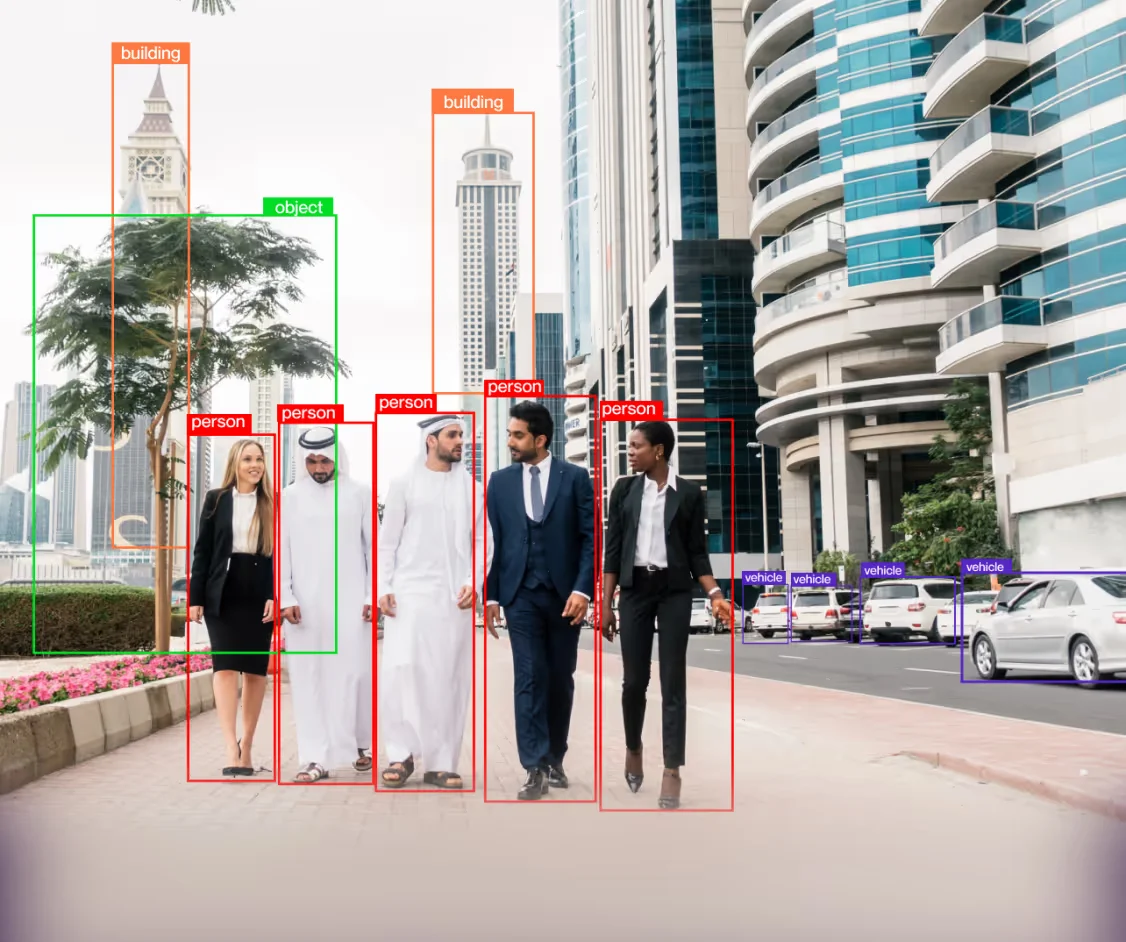
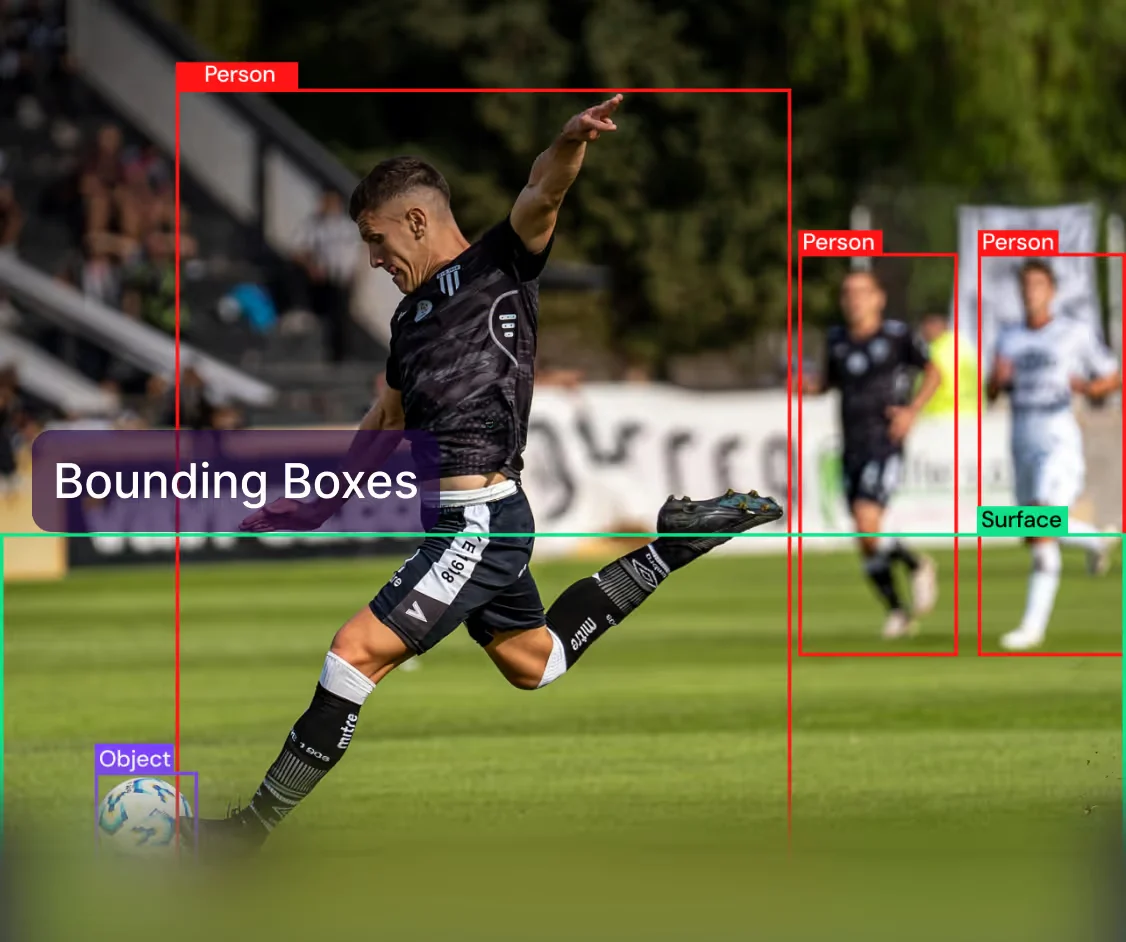
Bounding box annotation is one of the most common and fundamental tasks in computer vision. It is the process of drawing rectangular boxes around objects in an image to label them for object detection models. While it may seem simple, the quality of your bounding box annotations has a direct and significant impact on the performance of your AI model. Inaccurate or inconsistent annotations can lead to a poorly performing model, regardless of how sophisticated its architecture is. This article provides a comprehensive guide to the best practices for creating high-quality bounding box annotations.

The Importance of High-Quality Annotations

In the world of machine learning, there is a well-known saying: "Garbage in, garbage out." This is particularly true for computer vision models. The model learns to identify objects based on the examples it is shown during training. If those examples are poorly labeled, the model will learn the wrong patterns.

High-quality annotations lead to:

  • Higher Model Accuracy: A model trained on precise and consistent labels will be more accurate in its predictions.
  • Better Generalization: A well-annotated dataset will help the model to generalize better to new, unseen images.
  • Faster Convergence: A model trained on high-quality data will often converge faster, reducing training time and computational cost.

Best Practices for Bounding Box Annotation

Ensuring the quality of your bounding box annotations requires a combination of clear guidelines, skilled annotators, and a robust quality assurance process. Here are some of the most important best practices to follow:

1. Ensure Pixel-Perfect Tightness

The most fundamental rule of bounding box annotation is that the box should be as tight as possible around the object of interest. This means:

  • No Background Pixels: The box should not include any pixels from the background.
  • No Cropped Objects: The box should not cut off any part of the object.

The goal is to create a box that perfectly frames the object. This can be challenging, especially for objects with irregular shapes, but it is crucial for training an accurate model.

2. Maintain Consistency Across the Dataset

Consistency is key to creating a high-quality dataset. All annotators should follow the same set of rules and conventions. This includes:

  • Consistent Labeling: Use the same label for the same type of object throughout the dataset.
  • Consistent Handling of Occlusion: Decide on a consistent strategy for handling objects that are partially obscured by other objects.
  • Consistent Handling of Object Boundaries: Define clear rules for where to draw the box when an object's boundaries are ambiguous.

3. Handle Occlusion and Crowded Scenes with Care

Occlusion (when one object is partially hidden by another) and crowded scenes are two of the biggest challenges in bounding box annotation.

  • Annotating Occluded Objects: There are two main approaches to annotating occluded objects. The first is to annotate only the visible part of the object. The second is to estimate the full extent of the object and draw the box accordingly. The best approach will depend on the specific requirements of your model. Whichever approach you choose, it is crucial to apply it consistently.
  • Annotating Crowded Scenes: In crowded scenes, it can be difficult to draw tight boxes around individual objects without them overlapping. In these cases, it is important to have clear guidelines on how to handle overlapping boxes. Some common strategies include allowing a certain amount of overlap or using a parent-child relationship to group related objects.

4. Create a Detailed Annotation Guide

A detailed and unambiguous annotation guide is the most important tool for ensuring high-quality labels. The guide should include:

  • Clear Definitions of Each Object Class: Provide a clear definition of each object class, along with examples of what should and should not be included in that class.
  • Visual Examples: Include plenty of visual examples of both correct and incorrect annotations.
  • Specific Instructions for Edge Cases: Provide specific instructions on how to handle edge cases, such as occlusion, truncation, and ambiguous object boundaries.

5. Implement a Robust Quality Assurance (QA) Process

Even with the best guidelines and annotators, mistakes will happen. A robust QA process is essential for catching and correcting these mistakes.

  • Review and Feedback: Have a senior annotator or QA specialist review a sample of each annotator's work and provide feedback.
  • Consensus-Based Annotation: Have multiple annotators label the same set of images and use a consensus mechanism to resolve any disagreements.
  • Performance Metrics: Track key performance metrics, such as the Intersection over Union (IoU) between annotators, to identify areas where the guidelines may be unclear or where annotators may need additional training.

Building better AI systems takes the right approach

We help with custom solutions, data pipelines, and Arabic intelligence.
Learn more

Conclusion

High-quality bounding box annotation is a critical but often overlooked aspect of building successful computer vision models. By following the best practices outlined in this article, you can create a high-quality dataset that will enable your model to achieve its full potential. Remember that the time and effort you invest in creating high-quality annotations will pay off in the form of a more accurate, reliable, and robust model.

FAQ

What is Intersection over Union (IoU)?
What is the difference between a bounding box and a segmentation mask?
What are some common tools for bounding box annotation?
How much does bounding box annotation cost?

Powering the Future with AI

Join our newsletter for insights on cutting-edge technology built in the UAE
Thank you! Your submission has been received!
Oops! Something went wrong while submitting the form.